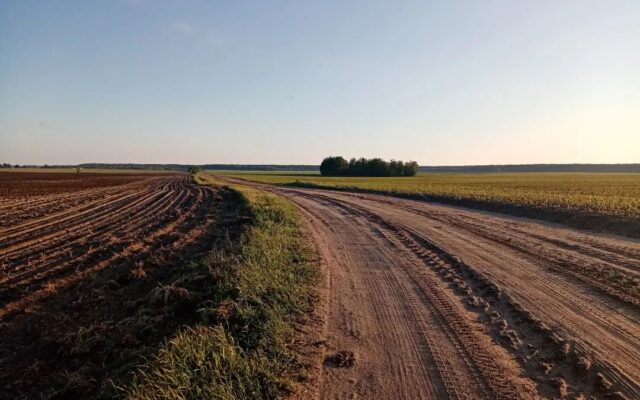
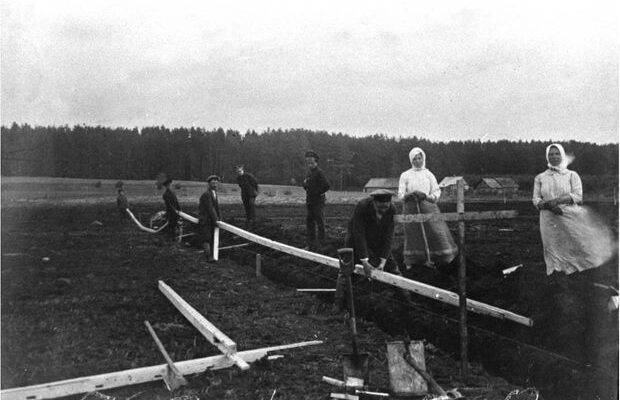
The destiny of the generation that rebuilt and transformed Belarus in the second half of the 20th century was inextricably bound with an era of profound scientific and technical inquiry. The life journey of my father, Vladimir Nikolayevich Piatnitski, was closely associated with Belarusian agronomic and reclamation science: from the lecture halls of the legendary Gorki Agricultural Academy and field trials at the Polesian station under Academician S. G. Skoropanov, to computer-aided modeling of soil productivity utilizing the first domestic mainframe computers.
Table of Contents
- 1. Alma Mater: Gorki Academy and Agronomic Training (1956–1961)
- 2. School of Academician S. G. Skoropanov: BelNIIMiVH and Dissertation Defense
- 3. The Polesian Proving Ground: Lysimeters, Automation, and Science in Action
- 4. From Harrow to Mainframe: Mathematical Models of Agroclimate on the ES-1020
- 5. Catalogue of Scientific Works and Publications (In Progress)
- 6. Archival Sources and Documents
1. Alma Mater: Gorki Academy and Agronomic Training (1956–1961)
Vladimir Nikolayevich Piatnitski was born on June 27, 1938, in the village of Korma, Dobrush district, Gomel region. His childhood unfolded against the background of harsh wartime privation and postwar devastation. Having lost his father — village teacher Nikolai Vasilyevich Piatnitski, who died in a prisoner-of-war camp during the opening months of the Great Patriotic War in the summer of 1941, — he learned early the enduring value of persistent agricultural labor and mutual support.
After graduating from secondary school, Vladimir worked for a year (1955–1956) in his native Dobrush district at the “Oborona” collective farm. This experience in practical farming finally shaped his professional choice: in 1956, he entered the Belarusian Agricultural Academy (BSHA) in Gorki.
In 1956, Vladimir Piatnitski entered Eastern Europe’s oldest agricultural higher education institution — the Belarusian Agricultural Academy (BSHA) in Gorki, enrolling in the Faculty of Agronomy. These were flourishing years for the academy, providing students with a formidable grounding in fundamental natural sciences: botany, agricultural chemistry, soil science, plant physiology, and land reclamation.
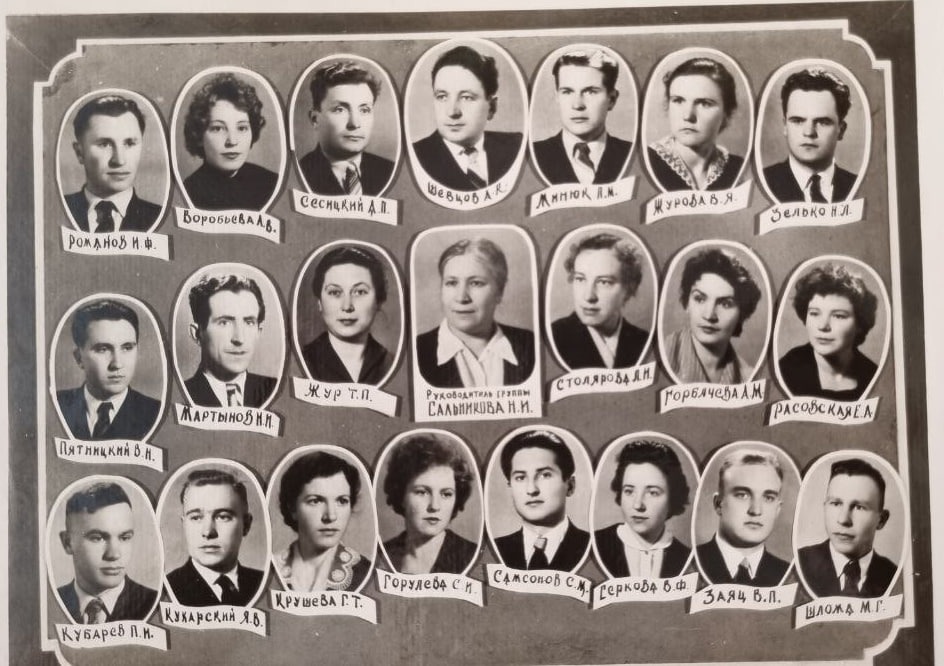
In 1961, Vladimir Nikolayevich successfully graduated from the academy with the qualification of an agronomist-scientist. The young graduate drew the attention of leading experts for his exceptional conscientiousness, deep understanding of plant biology, and aptitude for research work.
2. School of Academician S. G. Skoropanov: BelNIIMiVH and Dissertation Defense
In April 1961, assigned directly by the Ministry of Agriculture of the BSSR, Vladimir Nikolayevich Piatnitski joined the republic’s primary scientific center — the Belarusian Research Institute of Land Reclamation and Water Management (BelNIIMiVH) in Minsk. He was appointed Junior Research Associate in the Department of Land Development and Agromelioration.

His official evaluation from the 1960s noted: «During his tenure, he has proven himself an executive, thoughtful research worker. Successfully fulfills all assigned responsibilities. Has passed the candidate minimum in a foreign language and pursues the study of philosophy and specialized disciplines…»
The young researcher’s scientific supervisor was the preeminent scholar, founder of the Belarusian agronomic school of farming on drained lands, future Minister of Agriculture of the BSSR, and Academician of the AN BSSR and VASKHNIL, Stepan Gordeyevich Skoropanov. Under his mentorship, Vladimir Piatnitski undertook a challenging and highly relevant topic: soil fertility preservation and the ecology of peat soils.
In January 1968, before the Specialized Scientific Council of BelNIIMiVH, Vladimir Nikolayevich successfully defended his thesis for the degree of Candidate of Agricultural Sciences in specialty No. 530 «General Agriculture»:
«Comparative Evaluation and Ecological Problems of Leguminous Crops on Peat-Bog Soils».
The study demonstrated that introducing perennial leguminous forages (lupine, clover, vetch) ensured natural replenishment of symbiotic nitrogen, shielded drained peatlands from catastrophic organic matter mineralization, and curbed destructive wind erosion.
3. The Polesian Proving Ground: Lysimeters, Automation, and Science in Action
For decades, the primary field and experimental proving ground for Vladimir Nikolayevich remained Polesia, centered at the Polesian Experimental Melioration Station (PDMS / PDMOS) in the Luninets District of Brest Region, alongside peatland tracts in the Lyuban and Ivatsevichi districts.
Vladimir Piatnitski conducted biophysical and agrophysical experiments. In 1972, he developed and introduced an original method for in-situ field measurement of root suction force in peat-gley soils (employing polyethylene root barriers and sucrose refractometry), establishing precise hydrological stress thresholds for field crops.
During the 1970s, the research group led by G. I. Afanasik, with the active participation of V. N. Piatnitski, revolutionized reclamation practices. The researchers proved that one-way drainage and simple sluicing without strict nutrient regulation triggered a 30–40% drop in grain yields. In 1978, at the Polesian station in Luninets, they established the republic’s first automated irrigation experimental tract (11 hectares), where sprinkling machines activated automatically via soil moisture sensors, alongside a 400-hectare vertical drainage system.
The culmination of this era was the publication in 1980 by the state publishing house «Uradzhay» of the landmark academic monograph «Comprehensive Regulation of Plant Living Conditions on Peat Soils» (co-authored with G. I. Afanasik, N. S. Shaban, and V. P. Tribis), which established the scientific foundation for hydraulic engineering construction in Belarus.
4. From Harrow to Mainframe: Mathematical Models of Agroclimate on the ES-1020
In the first half of the 1980s, Vladimir Piatnitski’s laboratory became one of the pioneers in applying computer technology to agronomic challenges in the republic. Collaborating with colleagues, he digitized multi-year experimental archives (16-year records from the Luninets, Ivatsevichi, and Oktyabrsky stations).
Utilizing the ES-1020 mainframe computer, a specialized mathematical model was designed: the growing season was divided into 38 ten-day intervals, with quadratic parabolic multiple regression equations derived for each span. In papers in 1984 (*Vestsi AN BSSR*) and 1990 in the all-Union journal *Pochvovedenie* (Moscow), V. N. Piatnitski formulated the law of agrotechnological determination: under primitive agricultural practices, yield fluctuations depend up to 70–75% on weather vagaries, whereas high agrotechnology and a regulated water regime diminish environmental vulnerability to a minimum, ensuring consistently high and stable yields.
5. Catalogue of Scientific Works and Publications (In Progress)
The scholarly legacy of V. N. Piatnitski encompasses dozens of published papers, reports, and monographs. Below is a structured catalogue of key publications, identified and systematized from surviving author reprints in the family archive.
Comparative Evaluation and Ecological Problems of Leguminous Crops on Peat-Bog Soils
Piatnitski V. N. // Dissertation abstract for Candidate of Agricultural Sciences. — Minsk: BelNIIMiVH, 1967. — 20 p.
Abstract: Investigated the physiological and ecological characteristics of leguminous grasses on Polesian peat soils. Substantiated peatland soil conservation methods through perennial nitrogen-fixing crops under the supervision of Acad. S. G. Skoropanov.
Determination of Root Suction Force
Piatnitski U. M. // Vestsi Akademii Navuk BSSR. Seryya selskagaspadarchykh navuk. — 1972. — No. 4. — P. 53–54.
Abstract: Developed a rapid in-situ method for measuring root suction force of field crops (winter rye, timothy grass, barley) at the Polesian station utilizing polyethylene barriers and microrefractometry.
Water and Nitrogen Regimes and Productivity of Shallow Organogenic Soils
Piatnitski V. N., Skoropanov S. G. // Izvestiya Akademii nauk BSSR. Seriya selskokhozyaystvennykh nauk. — 1972. — No. 2. — P. 10–15.
Abstract: Four-year lysimeter (2×2 m) and field trials at the Luninets station. Established drainage norms (50, 70, 100 cm) and proved the decisive role of nitrogen nutrition in evening out soil fertility disparities on shallow peatlands.
Comprehensive Reclamation as the Foundation for Increasing Crop Yields
Afanasik R. I., Piatnitski U. M., Shaban M. S., Trybis V. P., Audzeyeu L. B. // Vestsi Akademii Navuk BSSR. Seryya selskagaspadarchykh navuk. — 1978. — No. 4. — P. 52–58.
Abstract: Scientific manifesto advocating automated simultaneous regulation of water, thermal, and nutritional regimes. Examined the 1978 commissioning of an 11-ha automated sprinkling site and 400-ha vertical drainage system at the Polesian station.
Comprehensive Regulation of Plant Living Conditions on Peat Soils
Afanasik G. I., Shaban N. S., Piatnitski V. N., Tribis V. P. — Minsk: Uradzhay, 1980. — 136 p.
Abstract: Major monograph consolidating a decade of research at BelNIIMiVH. Formulated theoretical principles and engineering methods for multi-factor regulation of water, air, heat, and nutrients on drained peatlands to achieve programmed crop yields.
Influence of Agromeliorative Measures on Barley Productivity on Shallow Peatlands
Piatnitski U. M., Audzeyeu L. B., Afanasik R. I., Trybis V. P. // Vestsi Akademii Navuk BSSR. Seryya selskagaspadarchykh navuk. — 1981. — No. 1. — P. 38–44.
Abstract: 1974–1979 field experiments at the Polesian station. Demonstrated the dual nature of sand covering on peat soils: organic matter conservation balanced against thermal and nitrogen constraints under excessive sand volumes.
Influence of Water Regime of Peat-Gley Soils on Crop Productivity
Piatnitski U. M. // Vestsi Akademii Navuk BSSR. Seryya selskagaspadarchykh navuk. — 1982. — No. 3. — P. 37–41.
Abstract: Five-year stationary trials (1976–1980) at Luninets. Demonstrated the differentiated water responses of timothy grass (highest moisture demand), barley (peak yield in dry sunny years under high PAR), and potatoes (sensitive to aeration).
Weather and Barley Yield on Peat Soils
Piatnitski U. M., Audzeyeu L. B. // Vestsi Akademii Navuk BSSR. Seryya selskagaspadarchykh navuk. — 1984. — No. 4. — P. 39–43.
Abstract: Statistical evaluation of 16-year experimental series from Polesian stations processed on an ES-1020 mainframe. Constructed 38 parabolic regression equations correlating precipitation and yield, showing weather vulnerability decreases with advanced agronomic control.
Influence of Hydrothermal Conditions on the Content of Mineral Nitrogen in Peat Soil
Piatnitski V. N., Avdeev L. B., Lavrenchuk G. I. // Pochvovedenie (Academy of Sciences of the USSR). — Moscow: Nauka, 1990. — No. 11. — P. 127–132.
Abstract: Consolidated findings of 5-year field and laboratory studies on ammonium and nitrate dynamics under cultivated crops and fallow. Derived mathematical expressions linking organic mineralization to soil moisture and temperature.
6. Archival Sources and Documents
- Piatnitski Family Archive: Graduate vignette of the Agronomy Faculty, BSHA (Gorki, 1961); official recommendation of Junior Research Fellow V. N. Piatnitski (BelNIIMiVH, 1960s).
- Author reprints of scientific articles by V. N. Piatnitski from *Vestsi AN BSSR*, *Izvestiya AN BSSR*, and *Pochvovedenie* (1972–1990).
- Belarusian State Archive of Scientific and Technical Documentation (BGANTD). — Fund 32 (BelNIIMiVH).
- National Library of Belarus: Collection of dissertations and research reports of the Institute of Land Reclamation.