Contents
- Introduction: From Spontaneous Drainage to Scientific Knowledge
- Early Origins: Queen Bona’s Canals, Reforms of Butrymowicz and Chreptowicz (16th–18th Centuries)
- Gory-Gorki Agricultural Institute and the Dawn of Engineering Education (1854)
- General Zhilinsky’s Western Expedition (1873–1898): The Birth of the Basin Approach
- The Minsk Peatland Experimental Station: The Komarovka Proving Ground and the Lakhva Question (1910–1914)
- Research Program and “Bolotovedenie” Journal: Defining the Bog as a Scientific Object
- World War I, Soviet Revival, and Peatland Meteorology (1914–1929)
- Stanisław Kulczyński’s Expeditions: Mapping the Peatlands of Polesia (1928–1933)
- The All-Union Peatland Institute of VASKHNIL and the Tragedy of June 1941
- Conclusion: The Legacy of the Pre-War Era
- Sources and References
Introduction: From Spontaneous Drainage to Scientific Knowledge
The history of land reclamation and drainage in Belarus is frequently reduced to the post-war campaigns of the 1960s–1980s and the millions of drained peatland hectares. Such a simplified perspective obscures the fundamental reality: the large-scale hydro-engineering transformations of the second half of the 20th century would have been impossible without a robust scientific foundation built by successive generations of researchers across a century and a half. Long before the advent of trenching excavators, pumping stations, and regulated polders, waterlogged landscapes had to be methodically surveyed, mapped, analyzed for hydrological balance, understood in terms of groundwater table dynamics, and tested for their ecological responses to drainage.
Through this arduous process emerged a unique scientific and engineering community uniting botanists, pedologists, geodesists, climatologists, agronomists, and hydro-engineers. The central institutional link in this continuum was the Minsk Peatland Experimental Station, founded in 1911 on the Komarovka peat bog. It connected the earlier traditions of private magnate land stewardship in the 18th century and General I. I. Zhilinsky’s monumental Imperial expedition with systematic, year-round field experimentation. This first part of our historical inquiry examines how impassable bogs were transformed into objects of precise scientific inquiry — from the first Renaissance-era drainage canals to the establishment of the All-Union Peatland Institute on the eve of the catastrophic summer of 1941.
Early Origins: Queen Bona’s Canals, Reforms of Butrymowicz and Chreptowicz (16th–18th Centuries)
The reclamation of waterlogged soils in Belarusian territories commenced centuries prior to the establishment of specialized ministries and research institutes. The earliest documented attempts at systematic hydro-engineering date back to the mid-16th century and are tied to the initiative of Queen Bona Sforza (1494–1557), Queen of Poland and Grand Duchess of Lithuania. Enacting comprehensive agrarian reforms (the “Hróf Measure” or “Voloka Measure”) across her Pinsk and Kobryn royal estates, Bona directed the excavation of drainage ditches to reclaim waterlogged lands and the construction of raised earthen causeways (haci). The earliest known reclamation waterway in Belarus — the historic “Queen Bona Canal” — connected the Pina River with tributaries of the Mukhavets, establishing the initial engineering benchmark in Polesia.


The genuine flowering of private reclamation practice arrived in the second half of the 18th century during the Enlightenment. The central protagonist of Polesian hydro-engineering was the Pinsk nobleman and statesman Mateusz (Maciej) Butrymowicz (1745–1814). Butrymowicz did not merely spearhead and supervise the excavation of strategic arterial waterways — the Ogiński Canal (1767–1783) and the Royal / Dnieper-Bug Canal (1775–1784), which simultaneously drained adjacent marshlands. On his private estates of Kristinopol and Franpol near Pinsk, he pioneered an integrated environmental model:
- Excavating regular rectilinear drainage grids dividing wetlands into manageable plots;
- Constructing hydraulic sluice gates to evacuate spring floodwaters while conserving moisture during summer droughts;
- Reinforcing canal banks with dense plantings of alder and willow to prevent peat slope erosion and collapse;
- Transforming previously impassable quagmires into highly productive seeded hay meadows and managed pastures.
Concurrently in the Novogrudok district, the Chancellor of the Grand Duchy of Lithuania, Joachim Litawor Chreptowicz (1729–1812), transformed his estate of Shchorsy into a celebrated European showcase of rational agrarian management. Replacing feudal serfdom with quitrent, Chreptowicz undertook the drainage of the waterlogged floodplain along the Neman River. At Shchorsy, open ditches and subsurface fascine drains were combined with crop rotation, legume cultivation, and clover seeding. The practical accomplishments of Butrymowicz and Chreptowicz demonstrated conclusively that reclaimed peatlands offered tremendous economic returns, provided that strict agronomy and continuous canal maintenance were preserved.
Gory-Gorki Agricultural Institute and the Dawn of Engineering Education (1854)
During the first half of the 19th century, progressive estates across Minsk, Grodno, and Mogilev governorates increasingly adopted drainage techniques, drawing upon British, Flemish, and Prussian precedents. Initial trials with subsurface ceramic pipe drainage were implemented. Nevertheless, isolated local successes were severely bottlenecked by the utter lack of trained engineering personnel capable of performing geodetic leveling, computing hydraulic discharges, and calculating bed slopes.
The decisive breakthrough occurred with the institutionalization of specialized higher education. In 1854, at the Gory-Gorki Agricultural Institute (Mogilev Governorate), Professor Celestyn Ciechanowiecki introduced an independent academic lecture and practical course entitled “Drainage of Bogs” — the first of its kind in the Russian Empire. Instruction was anchored on the institute’s experimental fields, where students surveyed and installed open ditches, fascine trenches, and kiln-fired clay drainage pipes. From that moment, land reclamation transcended intuitive manual ditch-digging to join the ranks of rigorous academic disciplines.
General Zhilinsky’s Western Expedition (1873–1898): The Birth of the Basin Approach
Prior to the 1870s, drainage initiatives remained predominantly piecemeal. Draining an estate bog frequently triggered severe flooding of downstream neighbor lands, as no overarching coordination existed at the watershed level. Recurrent calamitous inundations, endemic malaria outbreaks across Polesia, and imperial state imperatives to access timber reserves prompted the government to initiate an undertaking of unprecedented scale.
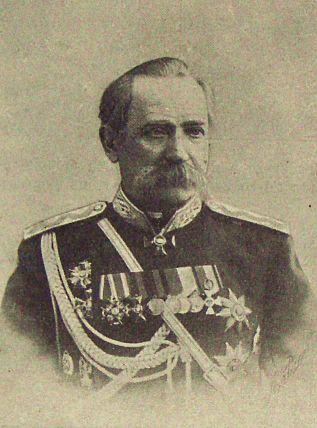
In 1873, the Imperial government organized the Western Expedition for the Drainage of Bogs, led continuously for twenty-five years by the eminent military engineer and geodesist General Iosif Ippolitovich Zhilinsky (1834–1921). The expedition operated across vast swathes of Minsk, Volyn, Grodno, and Mogilev governorates, concentrating primarily on the Pripyat River basin:
- Over 8.3 million hectares of land were geodetically surveyed and leveled;
- 4,671 versts (approx. 4,980 km) of main arterial and secondary drainage canals were constructed;
- More than 2.5 million desyatinas (approx. 2.7 million hectares) of wetlands were reclaimed for agriculture and forestry;
- Over 300 versts of waterways were rendered navigable for commercial timber rafting and rivercraft.
The cardinal scientific contribution of Zhilinsky’s expedition was the formulation of the watershed basin principle: the hydrographic network of the Pripyat and its major tributaries (Yaselda, Pina, Horyn, Styr, Ptich) was treated as an indivisible hydrological system. Before any canal was dug, the expedition executed comprehensive triangulation and hypsometric leveling, recording rainfall, seasonal runoff, and flood discharges. The fieldwork engaged prominent scientific luminaries of the era, including soil scientist V. V. Dokuchaev, climatologist A. I. Voeikov, and botanist G. I. Tanfiliev.
At the 1878 Exposition Universelle in Paris, General Zhilinsky’s Polesian drainage enterprise was awarded an Honorary Diploma, and Zhilinsky himself received the Grand Gold Medal. The synthesis of this quarter-century achievement culminated in the monumental report “Survey of the Works of the Western Expedition for the Drainage of Bogs (1873–1898)” (St. Petersburg, 1899) and an elaborate engraved folio “Atlas of Maps,” which served as an authoritative reference manual for generations of engineers.
The Minsk Peatland Experimental Station: The Komarovka Proving Ground and the Lakhva Question (1910–1914)
By the opening of the 20th century, practical experience demonstrated that digging a ditch and dropping water levels was merely an initial step. Drained peat bogs left without proper agronomy rapidly degraded, succumbed to peat fires, or suffered acute weed infestation. A pressing need arose for a permanent stationary scientific facility dedicated to year-round investigations of peat soil dynamics, crop adaptation, and mineral fertilizer formulations.
Historical records note two foundational milestones: February 22, 1910 (preliminary authorizing resolution by the Minsk Provincial Zemstvo) and August 21, 1911 (formal ministerial charter approval and allocation of operational funds). The zemstvo initially designated an experimental plot on the Kukutelka bog tract near Lakhva railway station (Luninets district). However, severe technical hurdles regarding gravitational water discharge on that remote Polesian site necessitated relocating the principal research ground nearer to the administrative center.
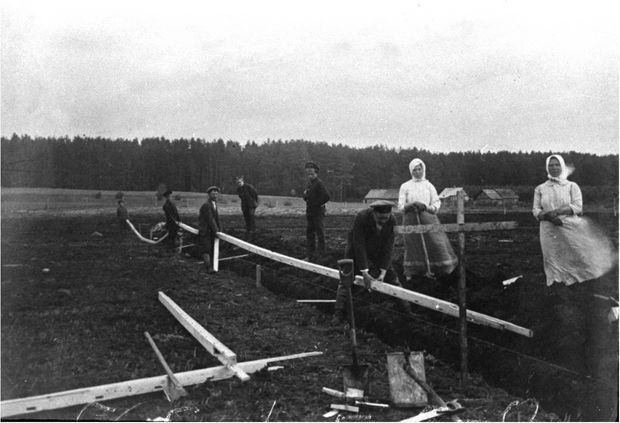
The chosen site was the northwestern outskirts of Minsk — the Komarovka peat bog, covering approximately 220 hectares (today the site of the Park of Friendship of Nations, Bangalore Square, and Maksim Bogdanovich Street). A 4-hectare experimental tract was demarcated. The Minsk Peatland Experimental Station (MBOS) thus became the first integrated scientific peatland research institution in the Russian Empire and among the pioneering facilities in Europe.
Its first director was botanist and agronomist Aleksandr Kirillovich Flerov, an alumnus of K. A. Timiryazev. He was soon succeeded by agrochemist Aleksandr Tikhonovich Kirsanov, while botanical investigations were directed by Vladimir Nikolayevich Dokturovsky. The Lakhva station was retained as an auxiliary southern Polesian outpost, enabling researchers to correlate Minsk observations with deep Polesian moor conditions.
Research Program and “Bolotovedenie” Journal: Defining the Bog as a Scientific Object
For the researchers at MBOS, the peatland ceased to be an undifferentiated wasteland. It was investigated as a complex living ecosystem governed by peat stratigraphy, botanical composition, ash content, water regime (groundwater seepage versus precipitation), and acidity.
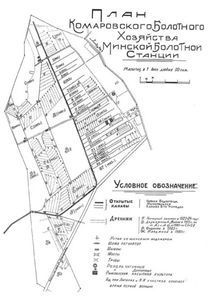

Dozens of comparative agronomic trials were established on the Komarovka plots:
- Evaluating open trenches against closed ceramic tile drainage installed at varying depths and lateral spacings;
- Calibrating potash, phosphate, and nitrogen fertilizer requirements on diverse lowland fen soils;
- Screening and crop trials for forage legumes, oats, winter rye, barley, potatoes, and industrial hemp;
- Long-term experiments with perennial grass-legume mixtures. By 1913, the station had formulated an enduring scientific postulate: perennial meadows and controlled pasture rotation represent the most ecologically sustainable utilization of drained peatlands, whereas continuous row-crop cultivation induces rapid organic matter oxidation and land degradation.
In 1912, the station established its scholarly organ — the monthly illustrated journal “Bolotovedenie” (Peatland Science) alongside the “Proceedings of the Minsk Peatland Experimental Station.” The publication served as an Imperial forum for field reports, reviews of Swedish and German moor stations, and blueprints of new ditchers and water-control gates. By 1917, dozens of issues had appeared, cementing the foundational scientific terminology of Russian and Belarusian peatland research.
In 1913, the facility received official regional status, extending its mandate over Minsk, Mogilev, Vitebsk, Grodno, Chernigov, and Volyn governorates. During this era, hydrologist E. V. Oppokov constructed a 10-verst hypsometric relief map of Polesia (1913–1918) — effectively the first physical 3D hydrological model of the Belarusian wetland basins.
World War I, Soviet Revival, and Peatland Meteorology (1914–1929)
The outbreak of World War I and the subsequent revolutionary turmoil disrupted scientific operations. The front lines fractured Polesia, research equipment was evacuated, and publishing ceased. Nevertheless, the physical plots of the Komarovka proving ground survived.
During the 1920s, operations resumed under the People’s Commissariat of Agriculture of the BSSR, witnessing substantial institutional expansion:
- 1924: Professor G. N. Vysotsky oversaw the establishment of an experimental forestry and fruit arboriculture nursery on the Komarovka peatland. Exotic tree species adapted to elevated water tables were evaluated, including the North American Eastern white pine (Pinus strobus), specimens of which survived into the 21st century in the Park of Friendship of Nations;
- 1927: The Minsk Peatland Meteorological Station commenced operations, functioning uninterruptedly until 1969. It systematically recorded surface water and soil evaporation, diurnal peat temperature profiles, and microclimatic inversions, demonstrating that drained peatlands suffer a significantly higher frequency of nocturnal spring and autumn frost events than surrounding mineral soils.
Stanisław Kulczyński’s Expeditions: Mapping the Peatlands of Polesia (1928–1933)
Under the Treaty of Riga (1921), western Belarus was incorporated into the Second Polish Republic. A distinct scientific tradition developed there, anchored at Lwów and Wilno Universities. Between 1928 and 1933, the eminent Polish geobotanist Stanisław Kulczyński (1895–1975) led extensive expeditions across the bogs of the Polesian Voivodeship.
Kulczyński meticulously mapped fen, bog, and transitional mire plant associations at 1:100,000 scale. In his landmark two-volume monograph “Torfowiska Polesia” (Peatlands of Polesia, 1939–1940), he articulated a genetic peatland classification based on hydrological regimes. Today, Kulczyński’s digitized cartography provides an invaluable baseline (“zero reference level”) for modern conservation biologists: by correlating his maps with modern satellite imagery, ecologists can precisely determine which habitats were irreversibly converted and which retain high potential for rewetting and restoration.
The All-Union Peatland Institute of VASKHNIL and the Tragedy of June 1941
By the end of the 1920s, the stature of the Minsk station transcended republic borders. On May 18, 1930, the Council of People’s Commissars of the USSR reorganized MBOS into the All-Union Scientific Research Peatland Institute (VNIBI) under the V. I. Lenin All-Union Academy of Agricultural Sciences (VASKHNIL). Minsk was officially acknowledged as the premier scientific capital of Soviet peatland science.
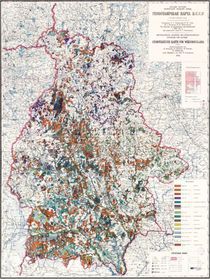
The institute established comprehensive departments: peatland science (headed by V. N. Dokturovsky), agrochemistry, soil science, hydro-engineering, and peatland economics. An extraordinary Museum of Peatland Science was organized, curating soil monoliths from all geographical regions of the USSR, seed banks, vast botanical herbaria, and field survey files. In 1934, its industrial branch separated into the Institute of Peat of the Academy of Sciences of the BSSR.
Prior to 1941, the institute published dozens of scholarly volumes, mapped the vegetation of the BSSR under N. I. Kuznetsov’s editorship, and trained the technical cadres who constructed the first major Soviet reclamation systems along the Oressa River (including the flagship collective farm “10 Years of the BSSR” in the Lyuban district).
This scholarly epoch ended abruptly on June 24–25, 1941. During the initial German air raids on Minsk, high-explosive and incendiary bombs scored direct hits on the institute’s main building on Komarovka. A ferocious fire ensued. In the conflagration, all archives compiled since 1910, the irreplaceable scientific library, expedition field notebooks, Museum monoliths, and herbarium collections were annihilated. Only scattered copies of periodicals and monographs retained off-site or in other cities survived.
Conclusion: The Legacy of the Pre-War Era
The pre-war epoch bequeathed to Belarusian science its most durable asset — the scientific method. Across sixty-eight years (from Zhilinsky’s initial surveys in 1873 to the institute’s destruction in 1941), Belarusian peatland study matured from rudimentary canal digging into a rigorous academic science. Three fundamental principles had been demonstrated:
- Peatlands cannot be drained in isolation: every engineering project must encompass the complete river basin;
- Reclamation without proper agronomy is destructive: organic soils require groundwater capillary management and protection against wind erosion;
- Fundamental research and engineering design must operate in continuous dialogue, verifying calculations against continuous field monitoring.
Following the liberation of Minsk in July 1944, the institute had to be rebuilt from ashes. A grand new era unfolded — the era of the Belarusian Research Institute of Melioration and Water Management (BelNIIMiVH), the engineering powerhouse “Belgiprovodkhoz,” the distinguished agronomic school of Academician S. G. Skoropanov, and hundreds of hydro-engineers dedicated to transforming Belarusian agriculture.
The story of how post-war institutions were rebuilt, how researchers and designers debated over drafting boards, the scientific role of Vladimir Nikolaevich Piatnitski’s legume ecology research, and how Belarusian hydro-engineers mobilized following the Chernobyl disaster of 1986 will be explored in Part Two of our historical study.
Sources and References
- Zhilinsky, I. I. Survey of the Works of the Western Expedition for the Drainage of Bogs (1873–1898). — St. Petersburg: Ministry of Agriculture and State Domains, 1899. — 744 p.
- Atlas to the Survey of the Works of the Western Expedition for the Drainage of Bogs (1873–1898) / Ed. by I. I. Zhilinsky. — St. Petersburg, 1899. — 42 plates of maps and drawings.
- Likhacevich, A. P. Reclamation Science of Belarus: Formation and Development // Melioration. — 2011. — No. 2 (66). — pp. 5–18.
- Meerovsky, A. S., Filipov, V. N. The Western Expedition for the Drainage of Bogs in the History of Melioration in Belarus // Melioration. — 2021. — No. 4 (98). — pp. 75–84.
- Proceedings of the Minsk Regional Peatland Experimental Station. Issues 1–4. — Minsk: Minsk Provincial Zemstvo, 1913–1916.
- Journal “Bolotovedenie” (Monthly organ of the Minsk Peatland Experimental Station) / Ed. by A. T. Kirsanov. — Minsk, 1912–1917.
- Kulczyński, S. Torfowiska Polesia (Peatlands of Polesia). — Kraków: Polish Academy of Arts and Sciences, 1939–1940. — Vol. 1–2.
- Garmatny, V. P. Historiography of Land Reclamation in the Polesie Voivodeship in 1921–1939 // BSU Bulletin. Ser. 3. — 2014. — No. 3. — pp. 14–24.
- Stock Catalog of the Belarusian State Archive of Scientific and Technical Documentation (BGANTD). Fond 32: Belarusian Research Institute of Melioration and Water Management.
- Skoropanov, S. G. Land Reclamation and Environmental Protection. — Minsk: Uradzhai, 1982. — 175 p.
- Dubakh, A. D. Hydro-engineering of Peat Soils. — Moscow–Leningrad: Selkhozgiz, 1936. — 248 p.
- Dokturovsky, V. S. From the History of Peatland Studies in the USSR // Torfyanoe Delo. — 1931. — No. 4. — pp. 22–27.
- Zelenkevich, N., Suvorov, I. The Origins of Belarusian Peatland Research // Environmental Bulletin / Bahna.land. — 2017.
- Kozlov, L. R. Maciej Butrymowicz — Pioneer of Polesian Reclamation // Monuments of History and Culture of Belarus. — 1986. — No. 2. — pp. 34–36.
- Institute of Melioration of the National Academy of Sciences of Belarus: Historical Sketch and Present Day / Ed. by Acad. N. K. Vakhonin. — Minsk: Belaruskaya Navuka, 2021. — 312 p.